
HABITUS
HABITUS is a research-based residential wellness standard that integrates human biology, aesthetic neuroscience, and environmental science to inform timeless, evidence-driven residential design.
Available on



HABITUS Quick Score
Your home shapes your health, focus, sleep, and longevity—often without you realizing it.
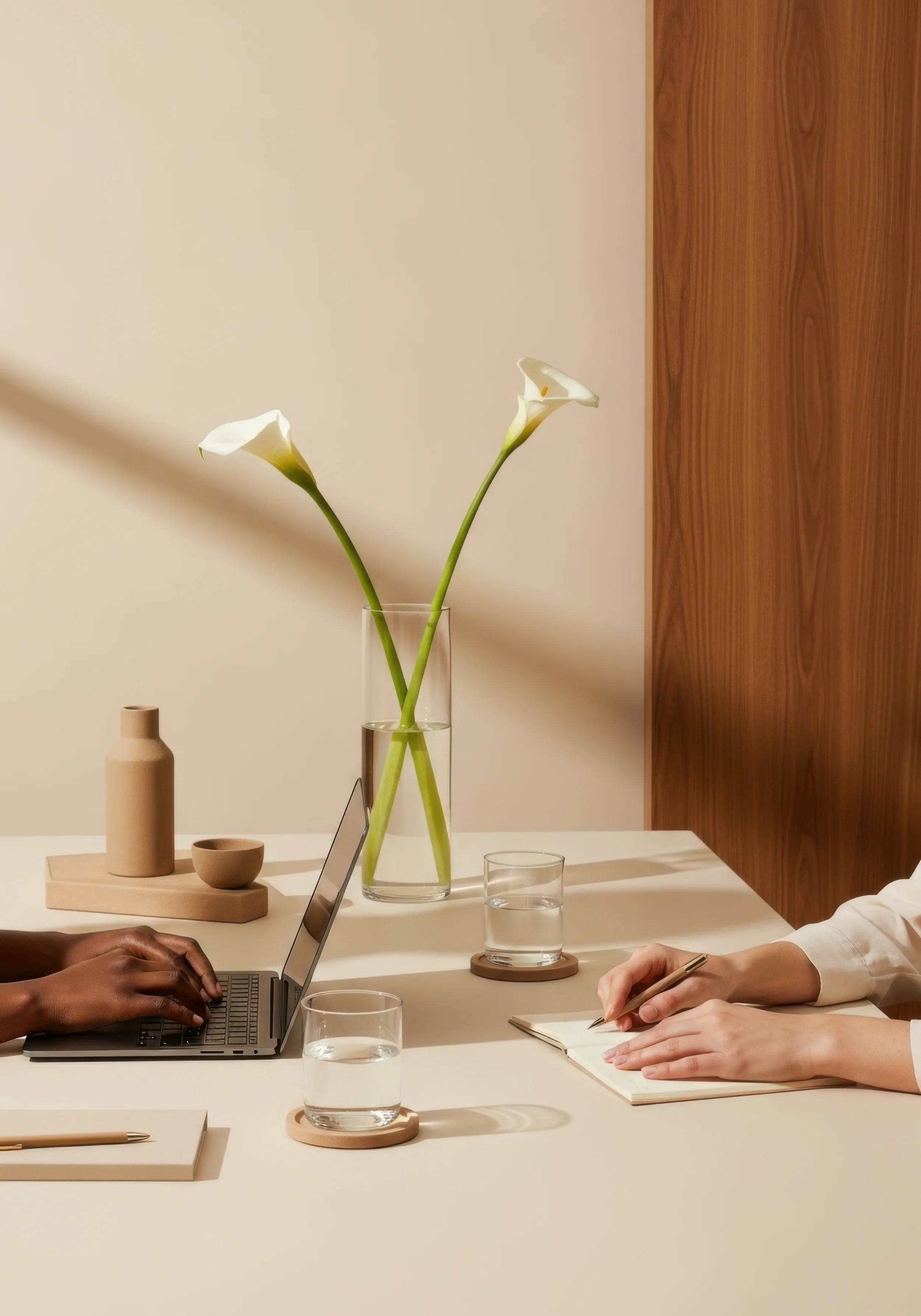
Our homes are not neutral.
They shape how we sleep, breathe, focus, recover, and age—often in ways we never consciously notice.
Most people think of their home as shelter, an investment, or an expression of personal style. Few consider it a daily environmental system acting on the nervous system, endocrine system, and circadian rhythm.
For decades, residential design has prioritized aesthetics, resale value, and efficiency, while the biological needs of the human body were treated as secondary or assumed. HABITUS exists to correct that imbalance.
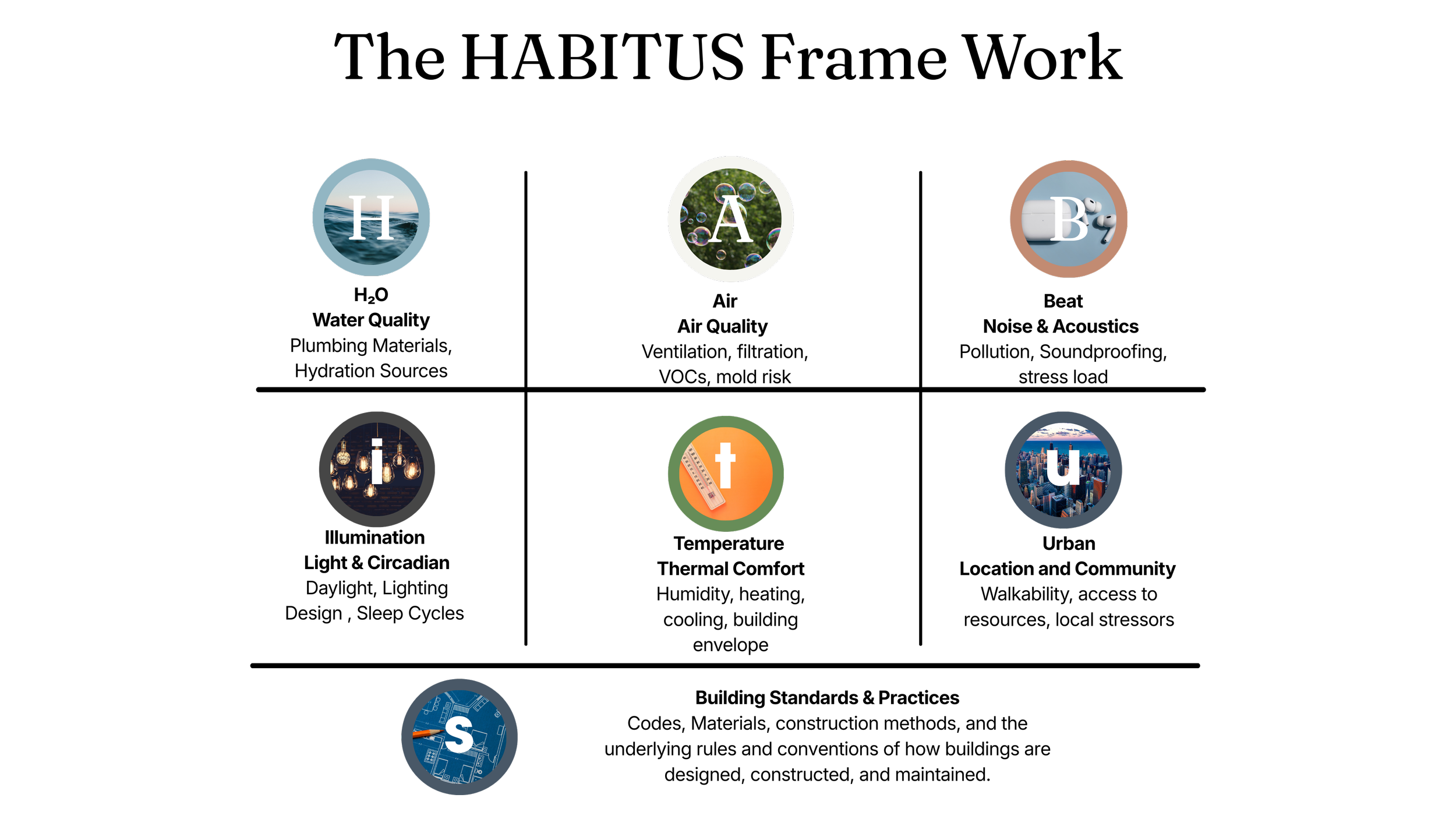
HABITUS is a research-informed framework for evaluating how a home supports human health—through air, water, light, sound, temperature, and surrounding context—so design decisions are grounded in physiology, not trends.
Big ideas, real impact.
HABITUS is the first residential framework designed to evaluate homes through human health, perception, and long-term wellbeing—rather than compliance or aesthetics alone.
Informed by environmental science, neuroaesthetics, and research-based design, HABITUS draws from established disciplines that examine the built environment as a physiological and psychological influence. These foundations guide how the framework evaluates homes and translates research into clear, practical design insight.
-
Environmental science examines how air, water, materials, temperature, and pollutants interact with the human body over time. In the context of housing, this includes indoor air quality, water exposure, material chemistry, moisture, and environmental stressors. HABITUS applies these principles to understand how everyday residential conditions support or strain long-term health.
-
Neuroaesthetics studies how the brain responds to sensory input such as light, sound, color, pattern, and spatial proportion. These factors influence stress levels, attention, mood, and cognitive load. HABITUS incorporates this research to evaluate how design choices affect the nervous system—not just visually, but physiologically.
-
Research-based design integrates findings from environmental psychology, building science, and health research into applied decision-making. Rather than assuming design outcomes, this approach tests, measures, and refines how environments perform for the people who inhabit them. HABITUS uses research-based design as a method for translating complex data into clear, actionable guidance.
Explore the HABITUS Standard
HABITUS works with homeowners, designers, and real estate professionals seeking a deeper understanding of how residential environments support human health and long-term wellbeing. Inquiries are reviewed carefully to ensure alignment and scope.